


'Do I Make Myself Small?'
- Adam Smith
- Mar 27
- 8 min read
As Islamophobia takes toll on many American Muslims, CAIR attorneys see time of worry...and hope
The video footage played on NBC 6, a South Florida news channel, showed agents who looked like they were ready to enter a battlefield. Donning camouflage helmets and bullet-proof vests, the authorities marched down the aisle of a Southwest Airlines jet originally bond for Florida as passengers are seen with their arms above their heads. The group approaches a man and carts him away. The March 6 flight from Tennessee had earlier made an emergency landing in Georgia, after reports that the man was supposedly acting suspiciously. His offense, according to news reports? Letting his Ramadan prayer app go off mid-flight.
“At first we couldn’t believe if this were true, or if it were accurate,” said Tahirah Amatul-Wadud, the executive director of the Massachusetts chapter of the Council on American-Islamic Relations, or CAIR-MA. She said her colleagues had discussed it in a chat group, and were shocked. The app, known as the Athan app, is highly popular among Muslims, she said, and it was the fasting and prayer month of Ramadan, which this year began in late February and ended in late March. And yet the passenger was singled out as a potential threat — without evidence — and federal agents, after a few hours had determined in fact that nothing was amiss.

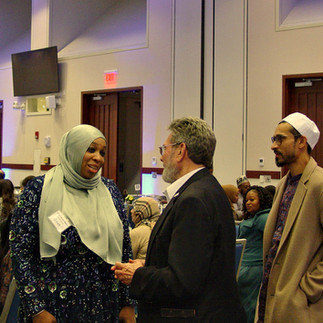

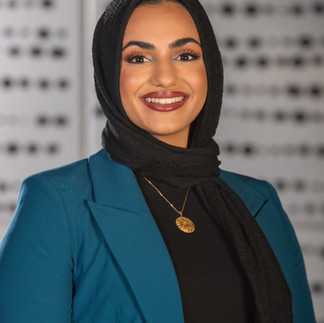
FEAR AND HOPE: Above, Tahirah Amatul-Wadud, the executive director of the Massachusetts chapter of the Council on American-Islamic Relations, or CAIR-MA, left, is seen last year at the group's gala. File photo by Adam Smith. At right is, CAIR attorney Mariam Aydah. Courtesy photo.
Yet his prayers and phone alarm were apparently enough to trigger a massive response that included the FBI.
Another news outlet, Fox 17 in Nashville, quoted a fellow passenger who said the man was “praying in a foreign language.”
Southwest later issued a statement, posted on an NBC affiliate, calling the incident a "misunderstanding" and apologized. But for CAIR’S Amatul-Wadud the heavy-handed response didn’t happen without context. For her, the diverted flight must be looked at against the backdrop of an uptick in Islamophobic rhetoric, especially from high-profile politicians. First, there’s the president, who during his candidacy in 2015, called for “a total and complete shutdown of Muslims entering the United States.” And then there are more recent political voices, like that of U.S. Rep. Randy Fine from Florida and Tennessee Rep. Andy Ogles. Ogles on March 9 wrote on social media that "Muslims don't belong in America."
Fine in December wrote on social media, “Diversity is not our strength. Diversity has become suicidal." Fine typed that line after noting several past terror attacks, including 9/11, and continued: "It is time for a Muslim travel ban, radical deportations of all mainstream Muslim legal and illegal immigrants, and citizenship revocations wherever possible. Mainstream Muslims have declared war on us. The least we can do is kick them the hell out of America.”
This kind of language, says Amatul-Wadud “is being used not only to harm Muslims in this country, but it’s being used to justify wars against Muslims across the globe (by) creating a ‘Muslim bogeyman.’”
And it doesn’t stop there. Leadership in both Texas and Florida have moved to prevent Islamic schools in their states from accessing school voucher programs, according to reporting from The Hill. The states have also tried to peg CAIR as a foreign terrorist organization. Locally, incidents of bias against Muslims, and groups such as Palestinians, have cropped up in online forums, road rage confrontations and elsewhere as well.
To get a perspective on how harmful language and incidents like what happened on the Southwest flight are affecting Muslims in America and locally, Sampan spoke with attorney Amatul-Wadud and CAIR-MA civil rights attorney Mariam Aydah. The following conversation, conducted by phone, has been edited for clarity and brevity.
Sampan: I’d like to start with that flight during which a passenger’s phone marking Ramadan prayer went off. This must have been traumatizing for the passenger who was praying. I am wondering how you saw this incident and what it says, perhaps, about people’s biases and what kind of message, if any, this sends to other Muslims?
Amatul-Wadud: The bottom line was, it was because a prayer notification went off on his phone. That is it. You don't need to have that much cultural competency to know that a prayer going off on the phone of a Muslim is not only very common, but it is harmless. However, we are living in a climate where propaganda against Muslims is working exactly the way it's supposed to work. It makes people uneasy. Anything about what Muslims do: If we speak in Arabic, if we say “I love you” or “goodbye” to our family members on a plane in Arabic, we risk being kicked off the plane. This happened a lot a couple of years ago, and it's starting to happen again with the backdrop of what's happening in Palestine and now what's happening in the Middle East, and it has a profoundly terrible impact on the quality of life of Muslims here in America.
Sampan: … Does it make people that you know, or either of you, feel like you have to go about things differently? Like putting the app on silent or changing ways, because there is fear that somebody's going to misinterpret something that's actually completely normal to do?
Amatul-Wadud: It was horrifying. I will say I travel a lot ... and I'm ashamed to admit it, but, “Do I make myself small?” As a visibly Muslim, African American woman, I do not want more attention. I do not put those apps on my phone. I do make myself small, because I just can't risk people being uneasy about my presence. And, the app, even though it's not at all anything that's uncomfortable, if it makes people feel alarm, then my flight will be diverted. I might end up on a no-fly list.
So, yes, I feel that many Muslims are challenged with making themselves small in order to be able to just survive in day-to-day interactions with their neighbors. It’s sad, because we're always telling people, you know, children who are in school, women, people with disabilities, “Don't make yourself small, because you are who you are.” But not if you're a Muslim in America, you just can't afford that privilege.
Aydah: I wouldn't say that I feel much differently than you. On that point, I agree. I feel like I try to blend in as much as I can with how I dress, how I am, even. At times, I'll speak a little bit in Arabic with my mom, and she will stop me, and say, “Don't talk in another language, we’re in an airport, and it can be misperceived.”
It's unfortunate, though, because for some people, their only language is their native language. And so that's more challenging for them to think that. So, do they not speak at all at these airports? How do they prevent being targeted, you know, through Islamophobia, through ignorance, through all the things that are happening right now.
Sampan: As you pointed out, we live in this world where people should be encouraged if they have disabilities or another difference to say, “This is who I am, and I am not going to hide it.” But yet, it feels like now you have these very real consequences…. For example, if you look at the protesters (who spoke out for Gaza) who were legal residents or legally in the U.S., a few got detained for many months and one up to a year, despite committing no crime. Does it feel like the stakes are higher, whereas before you might get a comment or something, but now does it feel like, “Who knows what could happen?”
Aydah: I think you're 100% on point with it. I do think it's escalating. I was actually recently talking with Tahirah about this, that I feel like Islamophobia is rising currently and it's more troubling, because even as with what we saw with the Southwest Airlines flight, it's escalating to a point that we couldn't even truly imagine. I feel like it’s exactly what you described. It's very traumatizing. I never would have expected that to be a reaction for a prayer app. This conversation (right now) is making me even more aware of that. And my family, we all have the app. Will I be warning my dad to turn his off when he travels the next month? Most likely, Yes.
Sampan: Now, you also have this rhetoric from people like Florida Rep. Randy Fine and other lawmakers .… How do you view this kind of rhetoric and what it says about the times we’re living in now?
Amatul-Wadud: The rhetoric that we’re hearing from Randy Fine in 2026 is very much like what we heard from then-candidate Donald Trump in 2015. … The climate was very dangerous for Muslims. What he’s saying isn’t just that he’s Islamophobic or it’s a one-off, but he’s rewarded for this vitriol against Muslims. And it’s letting others, like the passengers on this plane, believe that Muslims aren’t worthy of being trusted and that we’re a threat, no matter what we’re doing.
...But the American public is a discerning community at this time. They are critically thinking, and I think the tide will turn. So, this brainwashing that we’re seeing by our elected leaders, I don’t think it will last much longer.
Sampan: So, you see some push back from the American people, that this is not working on the greater public...?
Amatul-Wadud: Yes.
Sampan: What are you two seeing locally in terms of Islamophobia, or do you think we haven’t seen this as much in Massachusetts.
Amatul-Wadud: We are starting to see it creep up. What we’re seeing is a general sense of complaints from folks who feel like there’s just this lack of tolerance toward Muslims. Generally, in the first three months of the year, we’re having people say they are being excluded from public services, we are having people complain that their colleagues at work are saying things that are anti-Muslim. I had a complaint from a young lady who went to take a ride-share and the (driver) tells her to take off her hijab, or you can’t get in the car car. She starts crying and she doesn’t take off the hijab and the car leaves. So, we may not be seeing violence … but what we are seeing is a lack of tolerance of Muslims. We think it definitely correlates with what’s happening across the ocean and with what’s happening in our own back yard….
Aydah: Primarily I think that a lot of the rise has involved pro-Palestinian speech — not even pro-Palestinian, it’s pro-humanity, speech. They are speaking out against what is happening abroad or just sharing basic information, and a lot of them are getting in trouble for that. We are seeing that a lot in the employment area. At their work, they are getting reported and then they are experiencing a lot of pressure or censorship. That’s the trend I’ve noticed in the past few weeks. I am afraid that it’s going to get a little bit worse, but I hope I’m wrong.… At the same time, I do feel there’s a little bit of balance in that I’m a little optimistic. Even with these complaints, now at least I am hearing that there are some people who are tolerant, who are supportive, whereas before it was just everyone against one individual; it was just one train of thought that we were allowed to think (around Pro-Palestinian speech) and anyone who went against that was getting persecuted. So, I do feel like there is a shift.


Comments